
Morris dancing is a form of traditional English folk dance. There are many different groups of both morris and traditional dance originating from areas around the UK, who each perform in a variety of styles. The styles include Border Morris, Clog Step, Cotswold Morris, Longsword, Maypole, Molly, Mumming, North West Morris, Rapper Sword and Stave dancing. The Morris Federation also includes members who perform similar forms of traditional dance or customs from the UK, and further afield, such as Country Dance and Appalachian.
Where to see Morris ‘live’? See our page: Where to see morris, sword, and clog dancing
Where to see Morris online? See our dance styles in action on YouTube ‘Buzzing Britain’ video playlist showcasing different styles of morris and sword dancing
Note that Carnival Morris is a separate branch of dancing, done primarily by girls in the North West of England, and they have their own separate umbrella organisations.
Appalachian Step Dancing (#AppalachianClog)
 Related to English clog dancing and Irish step dancing, with a distinct exuberant style, Appalachian step dances originate from the USA, but are now performed by many teams in Britain in both Buck and Wing and Flatfooting styles. Dancers usually wear tap shoes.
Dance tradition hashtags: #AppalachianClog #AppalachianDance
Border Morris Dancing (#BorderMorris)
 Border Morris is a loose, energetic form of dance using heavy sticks, mainly to a single step and danced to live music, originating in the English counties along the border with Wales. Performers often wear rag jackets and paint their faces or use other forms of disguise.
Dance tradition hashtags: #BorderMorris #BorderMorrisDance
Clog Step Dancing (#ClogStep)
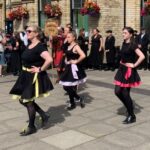 A dance style, usually performed solo, with percussive footwork and fine timing. In England it is thought to have originated in northern industrial towns where workers wore stout wooden clogs. Dances usually follow set routines in distinct patterns, and many originate from individual dancers.
Dance tradition hashtags: #ClogStep #ClogStepDance
Cotswold Morris Dancing (#CotswoldMorris)
 Performed with hankies and sticks, to live music, usually by teams of 6 or 8. Dancers often wear ribbons, baldrics or waistcoats, bells and decorated hats. This style, from the Cotswold villages of Gloucestershire, Oxfordshire, Northamptonshire and Warwickshire, is, for most people, the quintessential picture of ‘morris dancing’.
Dance tradition hashtags: #CotswoldMorris #CotswoldMorrisDance
English Country Dancing (#CountryDance)
 Social dances for couples performed between the 17th and early 19th centuries. Many dances were published by John Playford, his descendants and others, from 1651 onwards. Some teams wear historical costumes and use acoustic instruments appropriate to the period.
Dance tradition hashtags: #CountryDance
Fools and Beasts in Morris Dancing (#FoolsandBeasts)
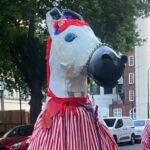 Many morris dancers are accompanied by people dressed as a ‘fool’ or a ‘beast’ such as a hobby horse or hooden horse, either to add to the spectacle, to create a connection between the performance and the audience, or both.
Dance tradition hashtag: #FoolsandBeasts
Longsword Dancing (#LongswordDance)
 Originating mainly in Yorkshire and the North East, longsword dances use rigid swords with one handle. Usually performed by a linked circle of six or eight dancers who interweave dancers and swords, breaking the circle when the swords are locked together and are held aloft.
Dance tradition hashtags: #LongwordDance
Maypole Dancing (#MaypoleDance)
 A traditional dance form, used both as a performance and a participatory social dance, maypole dancing features a tall pole with ribbons attached at the top, also often decorated with flowers. Dancers hold a ribbon each and dance around the pole in various intricate patterns, forming many different woven designs.
Dance tradition hashtags: #MaypoleDance #MaypoleDancing
Molly Dancing (#MollyDance)
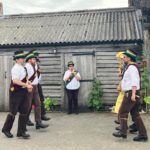 Firmly rooted in the Cambridgeshire Fens and areas around the Wash, Molly Dancing has developed alongside Ploughboy/Plough Monday celebrations at Epiphany and Straw Bear celebrations. It is recognisable by striking costumes and single step footwork. Dancers often use disguise or face paint and dance to live music.
Dance tradition hashtags: #MollyDance #MollyDancing
Mumming and Guising Plays (#Mumming)
 Mumming and guising plays are short verse dramas performed seasonally with regional variations in England, Northern Ireland and southern Scotland. The traditional texts feature a mock sword fight or assault, and a quack doctor is brought in to cure the loser. They may also feature songs and short dances.
Dance tradition hashtags: #mumming #mummers
North West Morris Dancing (#NorthwestMorris)
 Nowadays danced in clogs by teams of at least 8 dancers, the original dances were inspired by workers in the weaving industries of North West England. Large bands, including drumming, accompany the dancers. Many teams were associated with rushbearing celebrations which led to the processional nature of the dance.
Dance tradition hashtags: #NorthwestMorris #NorthwestMorrisDance
Plough Morris Dancing
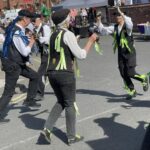 Originating in Yorkshire, Nottinghamshire and Lincolnshire, this style is usually performed by teams in multiples of 3 or 4, holding a variety of percussive items or flags. Dancers often wear ribbons or tatters and use face paint or disguise. Performed to live, often local, music.
Dance tradition hashtags:
Rapper Sword Dancing (#RapperSwordDance)

Originating in northeast England, Rapper Sword is danced by 5 dancers with flexible steel ‘swords’ with handles on both ends. Dances involve complex figures which interweave dancers and swords, only breaking the circle to form a ‘lock’. Often accompanied by Tommy and Betty characters who interact with the audience.
Dance tradition hashtags: #RapperSword #RapperSwordDance
Stave Dancing (#StaveDance)
 Originating from Friendly Societies in southwest England, especially Somerset, Dorset, and Wiltshire, where teams of dancers carry long decorated poles (staves) over their shoulders whilst performing. Few original dances are known, with others being created from contemporary accounts.
Dance tradition hashtags: #StaveDance
Step Dancing
 Dance styles, usually performed solo, with percussive footwork and fine timing. Generally performed in hard soled shoes. Dances are often freestyle although there are some set dance routines.
Dance tradition hashtags:
Last updated: March 2026
